


Daniel Seed brings broadcasting professionalism to the classroom
Isaac Adjei & Chinaza Okechukwu
June 26, 2026
Daniel Seed, associate professor of practice in the School of Journalism and Mass Communication at Texas State University, brings nearly a decade of hands-on television experience into the classroom. He uses real-world experience to prepare students for careers in media.
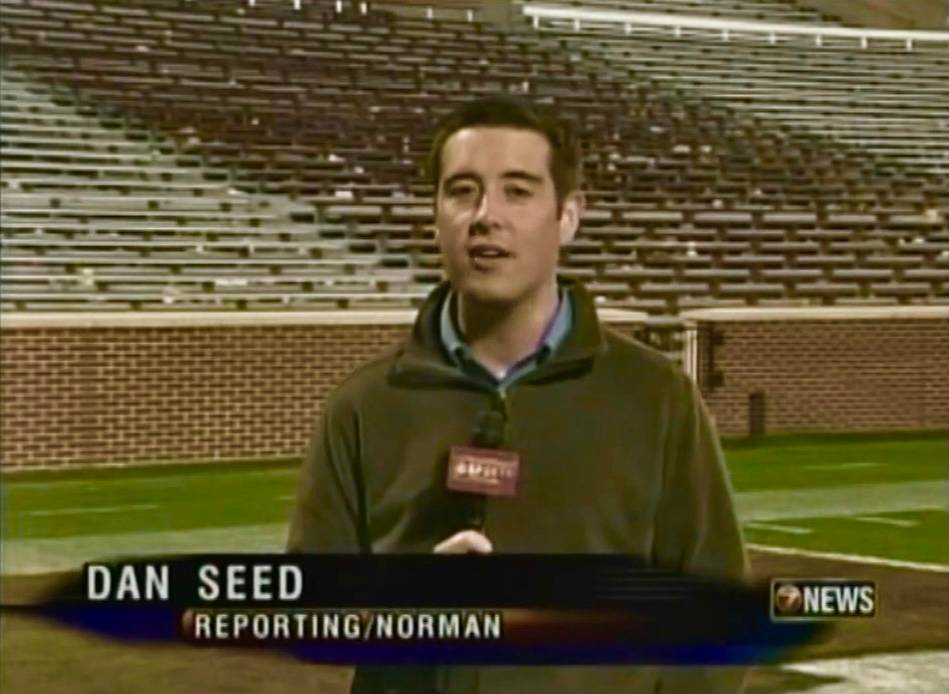
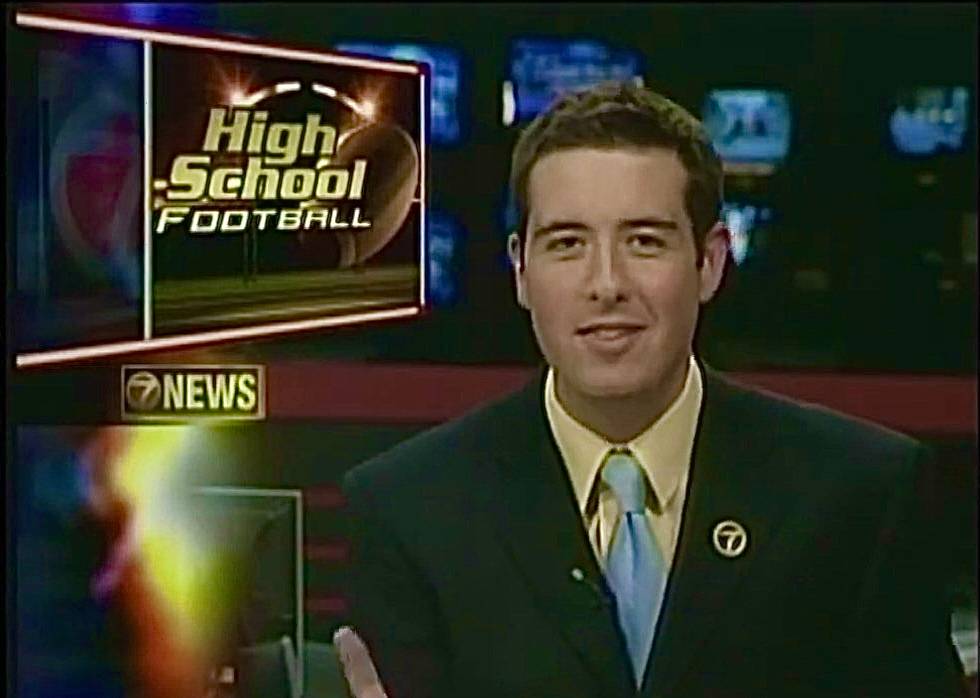
Daniel Seed reporting for KSWO in Lawton Oklahoma.
What were you doing professionally before you became a professor?
Right out of college, Seed worked as a news writer at WHDH-TV, a Boston television station.
On his train ride to work, Seed received a phone call from an Oklahoma number, and it was Jan Stratton, the news director at KSWO-TV in Lawton, Oklahoma. After a short interview, Stratton offered him a job as a general assignment reporter.
“She was like, 'do you have time?' I said, 'Yep, I'm commuting. Let's do the interview,” Seed said. “She offered me the job, and I went to Lawton, Oklahoma, sight unseen.”
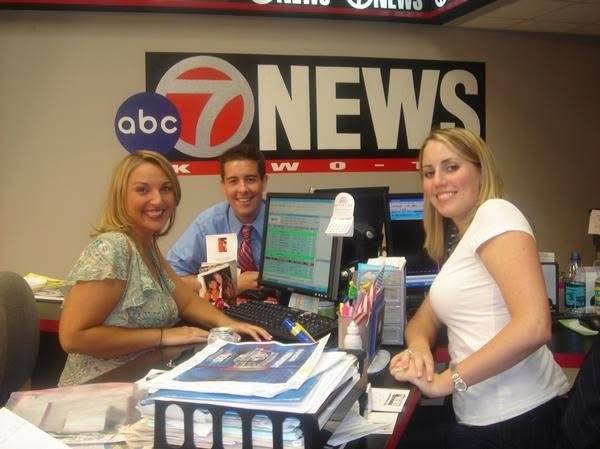
Seed worked at KSWO from 2005 to 2011, first as a news reporter and later as a sports anchor. He later left the station for KAGS, an NBC affiliate startup in Bryan-College Station, as a sports anchor and reporter.
“We built a television station and started it in the year 2011,” Seed said.
In 2011, Seed left KAGS in pursuit of a graduate degree and joined the Texas State faculty in 2016.
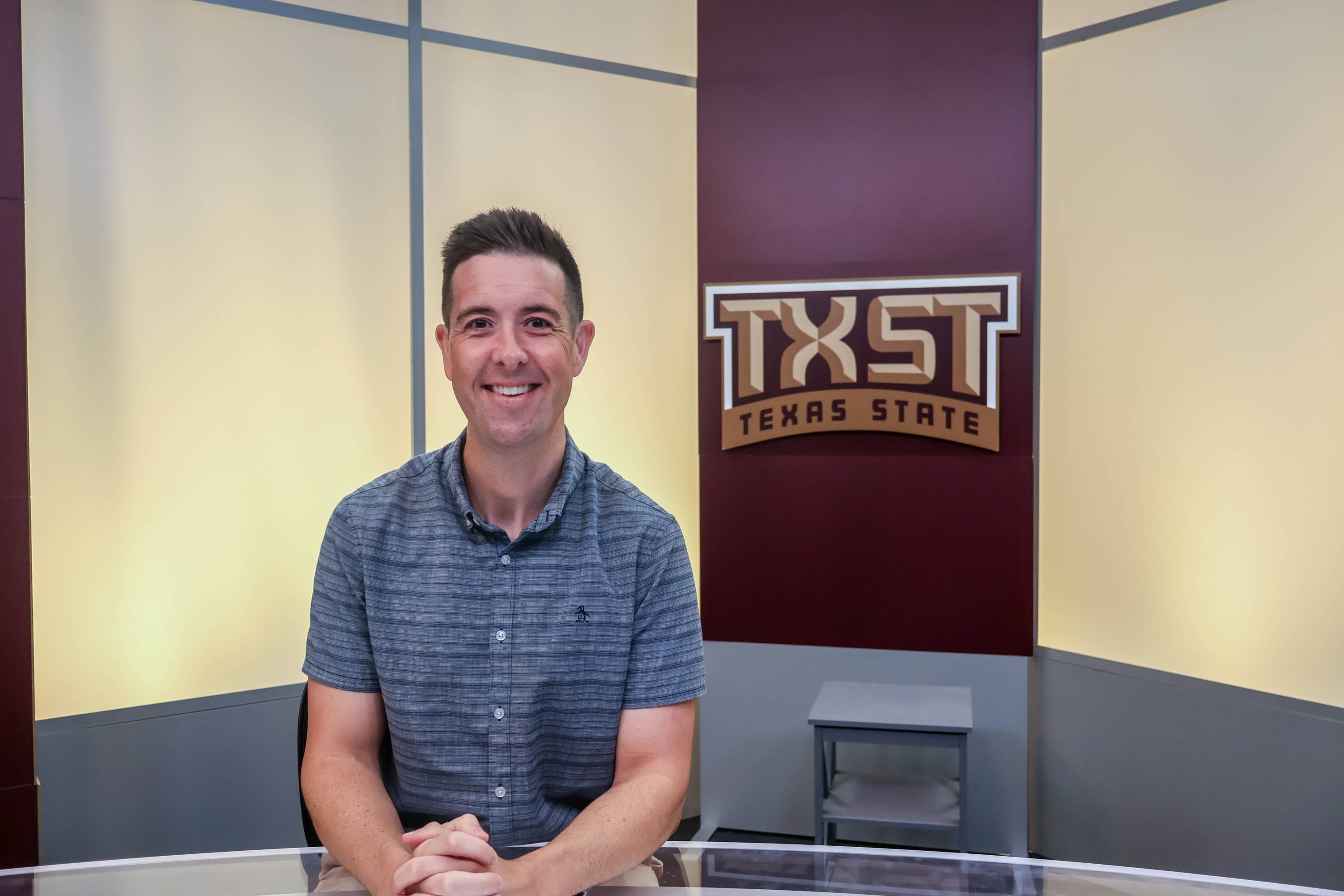
Seed at TXST Live Oak TV Studio.
What accomplishment from that time are you most proud of?
Seed said one of his proudest moments came while covering a story about a Fort Sill soldier who wanted to donate a kidney to his dying mother.
The solider was a matching donor, but the Army refused to allow the donation because of his active status during the Iraq and Afghanistan wars.
Seed ran the story after the Army declined to comment. The story was picked up by CNN and NBC affiliates in Boston. It generated public support that helped move the Army to allow the donation.
“It's not the fact that my story got picked up that makes me most proud. It's the fact that we weren't afraid to go up against the Army and report that story,” Seed said. “Putting a light on what these soldiers go through, not only as soldiers but as human beings is what I am most proud of.”
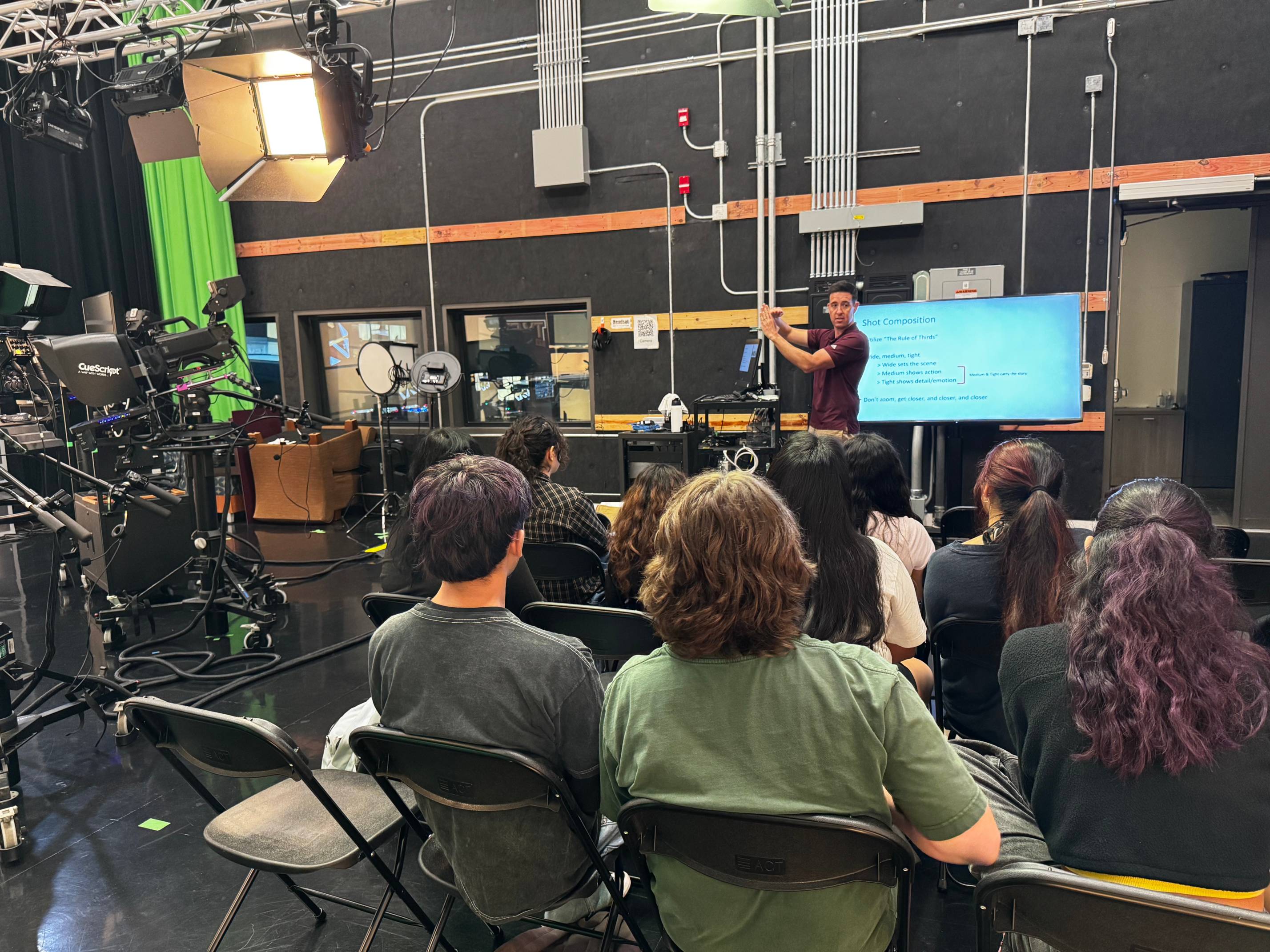
Seed teaching at the SJMC Summer Intensive Course at Live Oak.
What career skills do you use most in the classroom today?
Seed said he uses his field experience to teach students how to find stories, choose equipment to use, and edit content. He focuses on helping students approach storytelling in new ways and refine their professional skills.
“Most of our students know how to shoot videos,” Seed said. “They shoot it with their phone, but the problem is nobody's ever told them what's professional and what's not.”
Seed said he tries to treat students as professionals so they can gain experience in the classroom before entering the industry.
What advice would you give SJMC students preparing for their careers?
Seed encourages students to engage in skill building activities on campus, whether with the University Star, KTSW, or an internship in the the field.
“Don't wait until your junior year or senior year to say, geez, I got to do all this,” Seed said. “Start as soon as you can because that way you can progressively build your skills as you go, and you will be more polished by the time you're ready to graduate.”
He said the media industry appears large, but connections made through internships and student media can help students find opportunities after graduation.
“When push comes to shove and it's time for you to apply for a job, that person that you interned with, chances are they know somebody who knows somebody,” Seed said. “And now all of a sudden, your resume is getting moved up the stack to be looked at rather than buried at the bottom.”
Who are some notable mentors and faculty that you have worked with?
Seed credits the late Kym Fox, Tim England, and Ray Niekamp as mentors.
“They all had a deep understanding of the business and deep career experience, which helped our students,” he said. “And they were fantastic at helping me ease my transition from the professional world to academia.”
Seed said the School of Journalism and Mass Communication and Electronic Media faculty bring professional knowledge and passion to their work and further student success.
“Kelly Kaufhold, our Electronic Media program coordinator, is a whiz with technology and incorporates all that in his classes, while leaning on his decades of experience in TV news, and is a prolific researcher.
“Mark Mederson is tireless and enthusiastic. He’s always working with students at sporting events and has opened doors for everyone.
“Heidi Makady launched our AWARE Lab studying AI and VR, and she brings experience in overseas journalism, and has a deep research background.
“Eun Jeong Lee is our ace down in the Live Oak Hall studio and brings real-world experience in public affairs programming and working for NBC’s Today during the 2018 Winter Olympics.
“Larry Carlson is my football buddy, and every week he seemingly has a well-known media pro from somewhere in Central Texas visiting his classes.
“Dan Schumacher is as real of a guy as I’ve ever worked with, and I’m continually impressed by his leadership at KTSW, elevating the station and our students.
“Bruce Levinson was a student of mine when he was in our graduate program just a few years ago, and I’m thrilled that Bruce is now on the faculty. He brings a wealth of knowledge from his decades of work on the sales side of the business with NBCUniversal.
“And Laurie Fluker is the most popular professor in SJMC for a reason. Every morning Laurie is meeting with students about class and life, and she’s an inspiration in that regard.
“I look up to the people I work with and greatly respect all the people in the electronic media major,” Seed said. “Everybody brings professional knowledge and passion to the classroom every single day. I’ve yet to have a bad day at work in the 10 years I’ve been at Texas State, and it’s because of people like them.”
About SJMC
The Texas State School of Journalism and Mass Communication prepares students for careers in media through hands-on learning and guidance from faculty with professional industry experience.
Article produced by graduate assistants Isaac Adjei & Chinaza Okechukwu, who conducted the interview, collected photos, built the webpage, and published the story for the School of Journalism and Mass Communication.