


Dino Chiecchi shares career experience and advice with students
Elizabeth Hayek & Royal Maddison
March 31, 2026
Eraldo "Dino" Chiecchi, associate professor of practice at Texas State University, brings more than three decades of journalism experience into the classroom, using real-world experience to prepare students for careers in media.
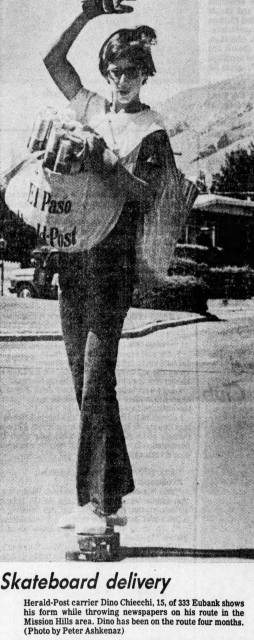
What were you doing professionally before you became a professor?
Before joining Texas State, Chiecchi worked as a journalist for about 30 years, covering a wide range of stories and building a career grounded in reporting and storytelling. He said his time in the industry shaped both his perspective and his passion for the field, which continues to influence how he teaches.
“I was in the business for about 30 years, and I enjoyed it immensely,” Chiecchi said. “People asked me what it was like, and I told them I never worked a day in my life. Some days were good. Some days were not as good. But every day was great. I loved being a journalist.”
Throughout his career, Chiecchi said he developed a strong appreciation for connecting with people and sharing stories that reflect lived experiences. He said those lessons now guide his focus on interviewing, gathering information and helping students approach sources with confidence.
“The classroom is a sacred place,” Chiecchi said. “But there’s nothing like being out on the road and covering real news with real people.”
He said blending classroom instruction with field experience helps students develop the skills needed to succeed in their careers.
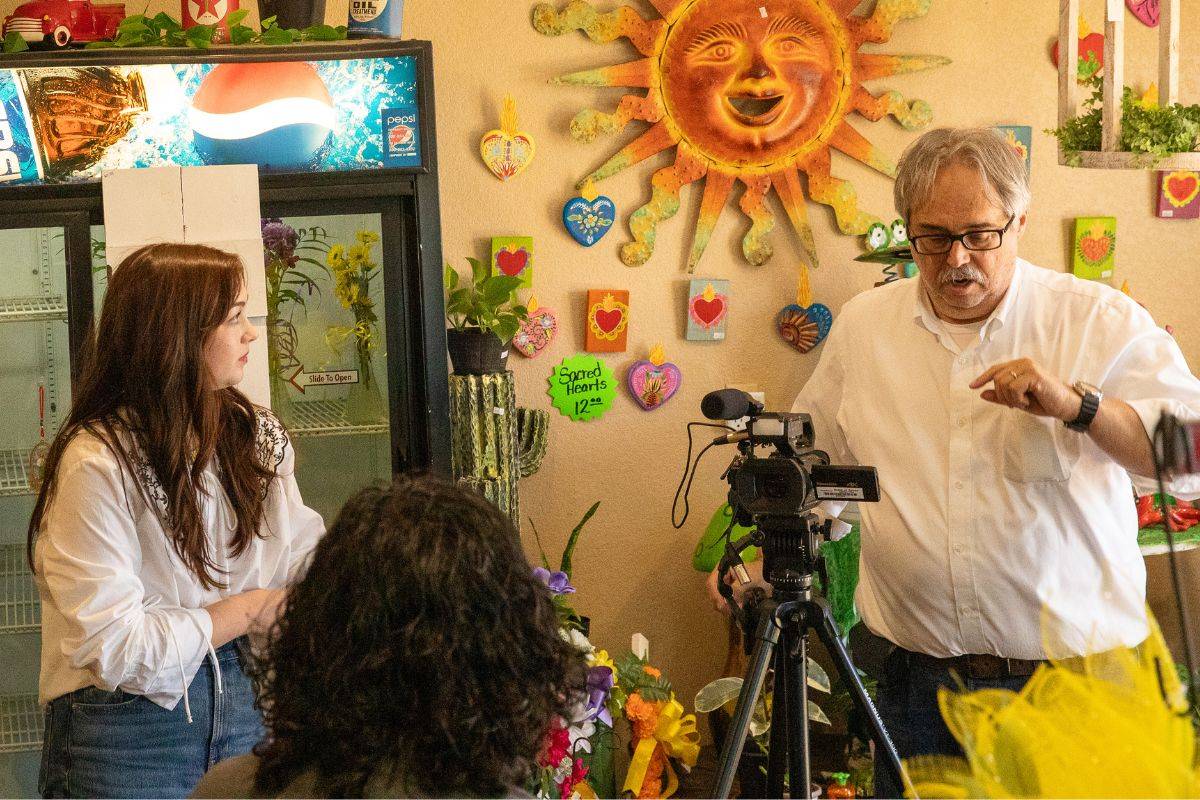
What accomplishment from that time are you most proud of?
Chiecchi said one of his proudest moments came while working with students on a reporting trip to Uvalde.“I took four students, and their work was extraordinary,” he said.
Professor Chiecchi’s students covered the anniversary of the mass shooting at Robb Elementary School in Uvalde, Texas.
“The Austin American-Statesman devoted an entire section to our work,” he said. "Not because they were doing us a favor, but because the journalism was that good.”
Chiecchi said the experience demonstrated the impact students can have when given opportunities to report in real-world settings.
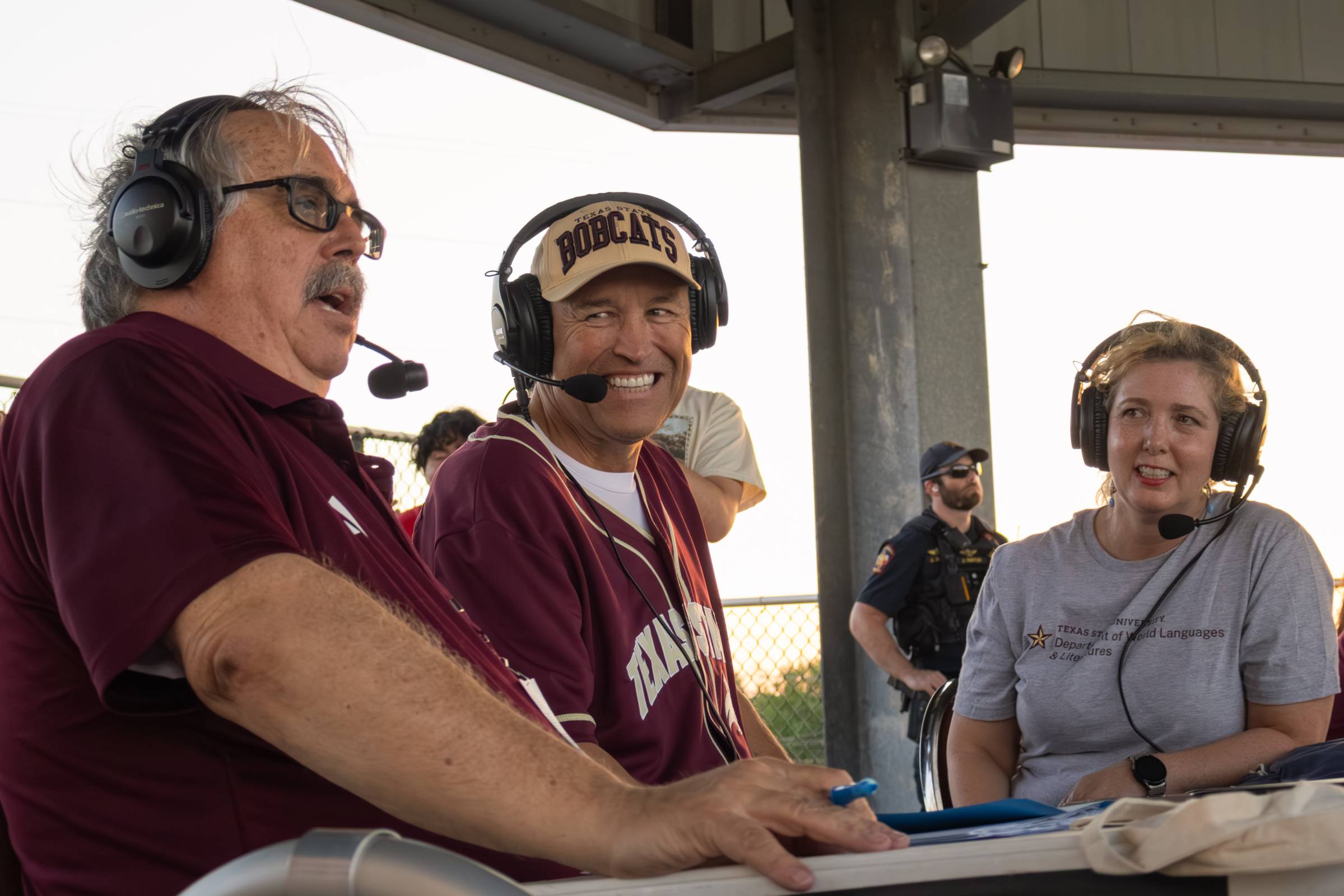
From left, Dino Chiecchi, President Kelly Damphousse and Dr. Yasmine Beale-Rosano-Rivaya broadcast Texas State’s first Spanish-language baseball game. (Photo by Jennifer Merrill)
What career skills do you use most in the classroom today?
Chiecchi said he focuses on teaching students how to approach and interview sources, especially in difficult situations. He said strong reporting begins with building trust and asking effective questions.
“How to interview people you don’t know,” he said. “How do you talk to a complete stranger, especially about the worst day of their life, and get them to be candid with you? That’s a tremendous skill.”
He added that students must learn the difference between reporting and writing, then bring those elements together to produce clear, effective stories.
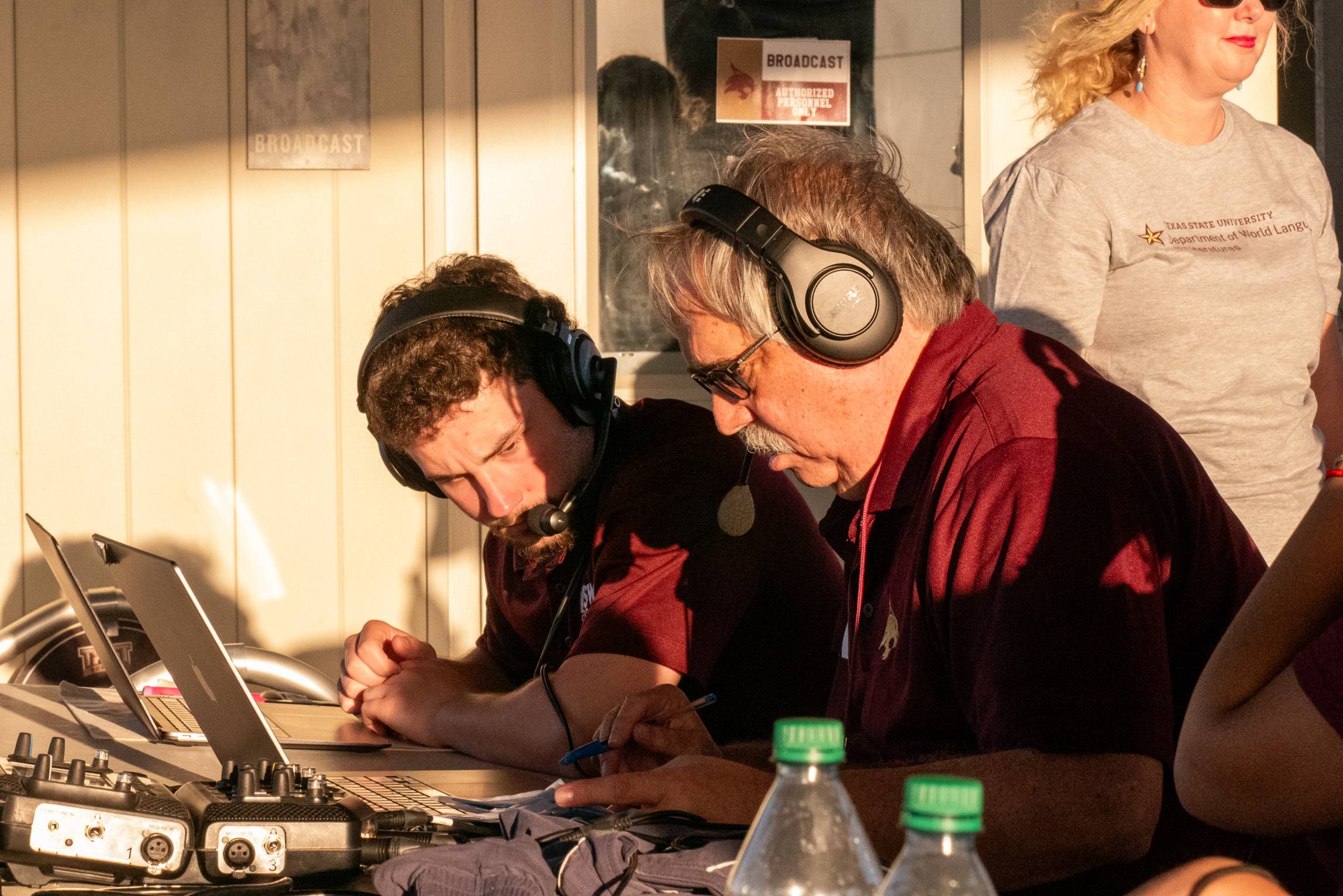
What advice would you give SJMC students preparing for their careers?
Chiecchi said persistence and communication are key for students entering the field. He encouraged students to adapt to different situations and reach people in ways that build connections.
“Be persistent,” he said. “Understand your audience and the people you are trying to reach. A lot of students rely on texts or emails, but many people still expect a phone call.”
He said stepping outside of one’s comfort zone is critical for success and reflects the School of Journalism and Mass Communication’s focus on innovation, real-world experience and preparing students to meet the demands of a changing media landscape.
“I decided that I wanted to change the world,” Chiecchi said. “And I decided the best way to change the world was by exposing the world to itself.”
Podcast Interview
Hear more about Dino Chiecchi’s career and teaching journey in this interview with Judy Oskam on the Stories of Change and Creativity podcast.
About SJMC
The Texas State School of Journalism and Mass Communication prepares students for careers in media through hands-on learning and guidance from faculty with professional industry experience.